Projection Effects That Add Visual Interest Without Taking Over The Room
Projection effects are one of those enhancements that work incredibly well when they’re used in the right environment — and feel completely unnecessary when they’re not.
At Beloved Entertainment, we’re very intentional about how and when we recommend projections. These effects aren’t meant to overpower a room or compete with lighting, décor, or the people in it. They’re designed to add texture, motion, and focus in moments where visuals matter most.
When projection is planned correctly, it can turn blank walls, ceilings, and focal points into something memorable. When it’s not, it disappears — or worse, looks washed out and distracting.
This page walks through the projection options we offer across Buffalo and Western New York, how they actually work in real venues, and when they make sense to include in your event plan.
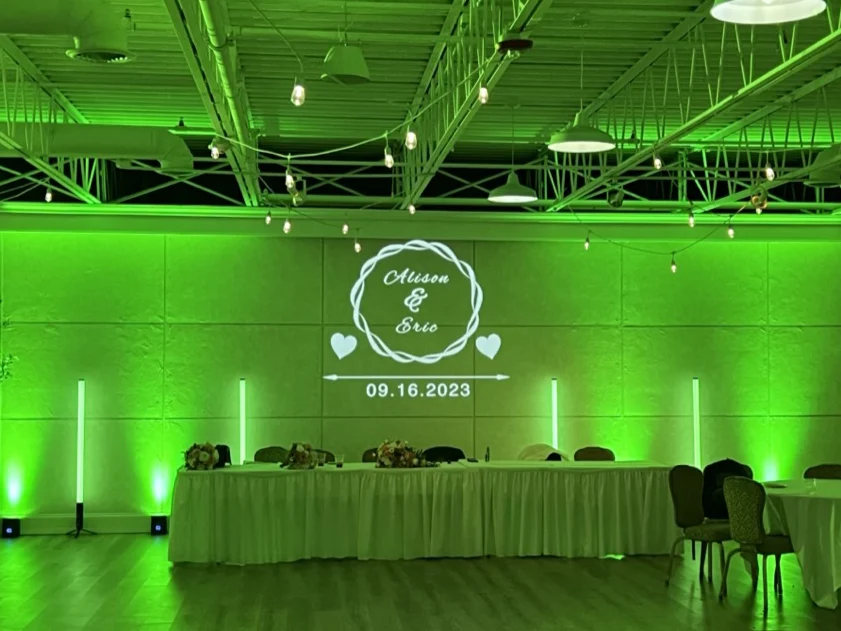
Animated Monograms
Animated monograms are one of the most common projection requests we get.
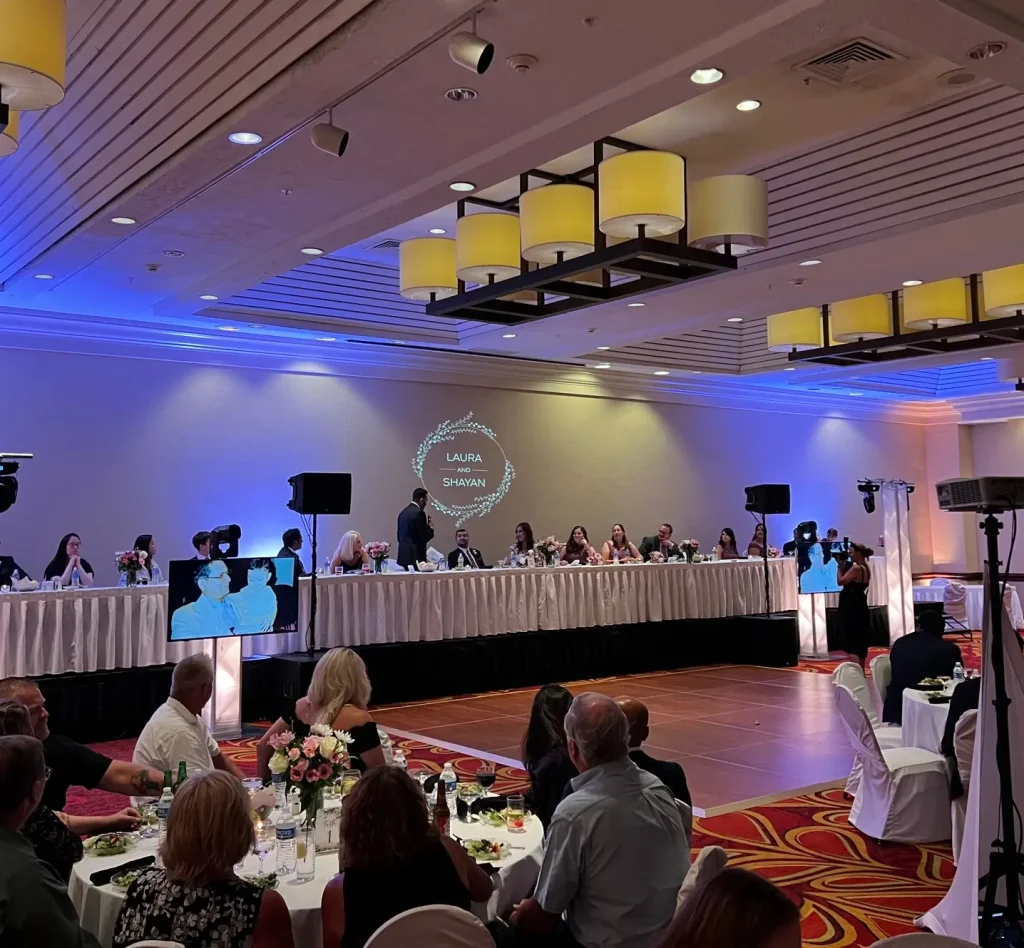
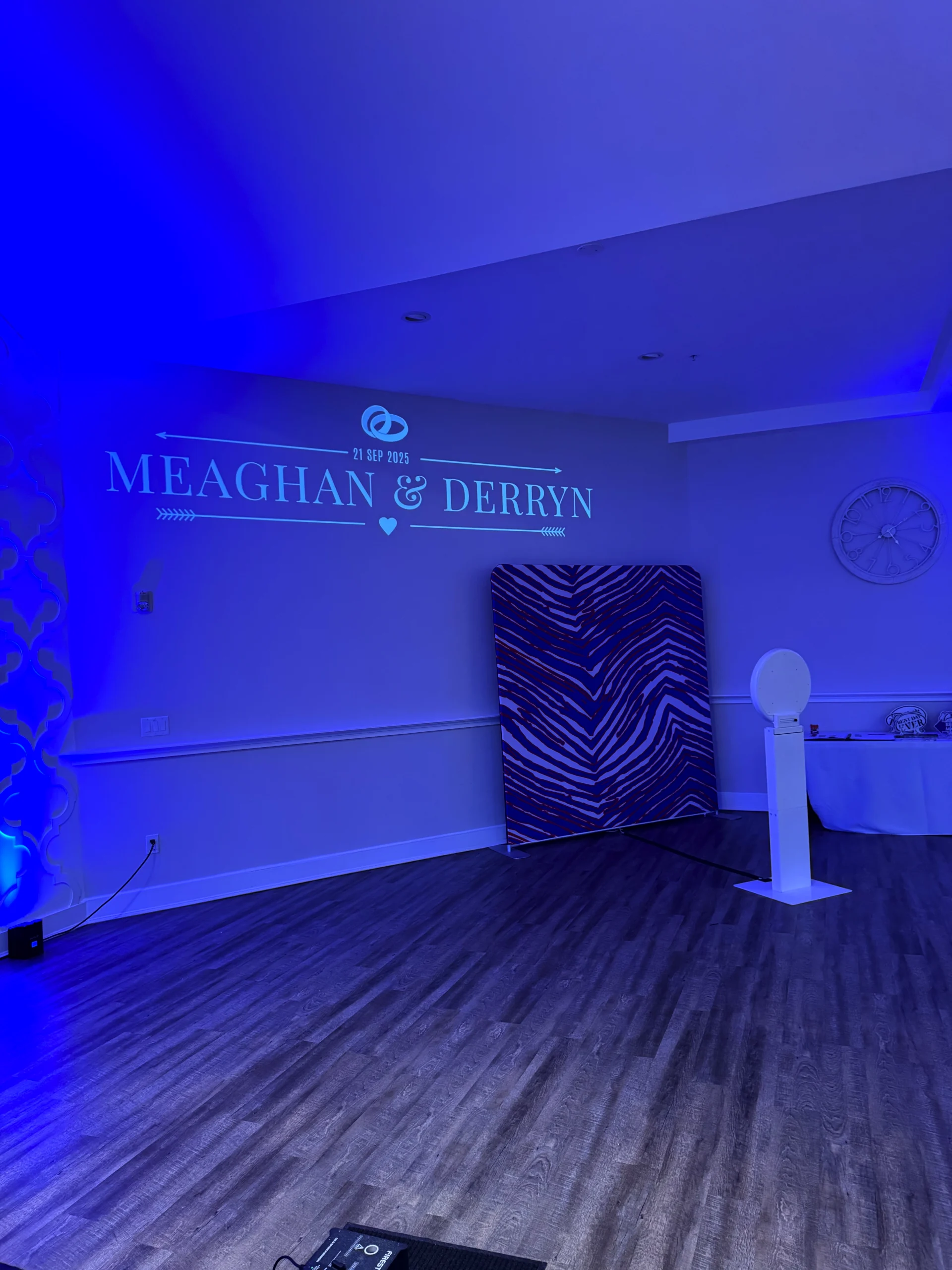
At their core, animated monograms are personalized visual designs that include names, initials, dates, or symbols tied to the event. They’re typically projected onto walls, or feature surfaces during specific portions of the event.
Where animated monograms work best is in controlled lighting environments. When the room is darker — during dinner, formal dances, or later in the evening — a monogram can be clearly visible and add a personal visual element without needing a physical display.
Where they struggle is in bright rooms. If a venue has strong ambient lighting, or daylight exposure, projections simply don’t read well. This is something we explain clearly during planning, because no amount of design can overcome physics.
From a planning standpoint, we handle design coordination, placement, and testing. Clients don’t need to worry about sizing, distortion, or brightness — those details are handled during setup.
When used in the right space and at the right time, animated monograms add a personal touch that feels subtle and thoughtful rather than forced.
Cake Mapping
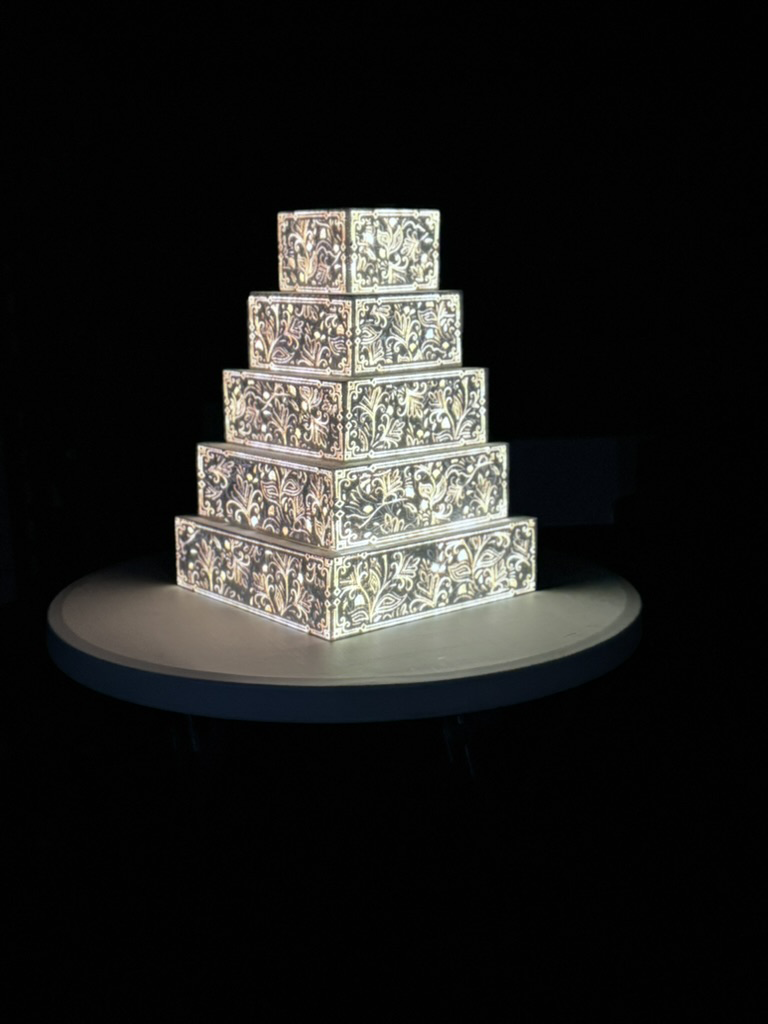
Cake mapping is a projection-mapping effect designed to decorate your cake and runs all night.
It works by projecting animated visuals onto a wedding cake, typically a white or lightly iced tiered cake. The projection is carefully aligned to the shape of the cake so that patterns, textures, or animations appear to wrap around it.
Because of the level of precision required, cake mapping involves coordination with the bakery ahead of time. The cake design, size, and surface all matter. Highly textured or dark-colored cakes generally don’t work well for this effect, and that’s something we discuss upfront so expectations are clear.
Cake mapping is usually presented briefly — often during a cake reveal or right before cutting. The lights dim, the projection runs, and the cake becomes a focal point for a short period of time. Or we use a fake cake so that your guests can enjoy the display all night.
From a technical standpoint, cake mapping requires careful placement, focus, and testing. The projector must be positioned so it doesn’t interfere with guests, photographers, or venue flow. All alignment is handled before guests enter the room.
Cake mapping isn’t for every event, but when the conditions are right, it creates a moment guests genuinely remember.
Textured Gobos
Textured gobos are one of the most flexible projection effects we offer, especially when a room feels large, open, or visually flat once the lights go down.
A gobo is a pattern placed inside a lighting fixture that’s projected onto a surface like a ceiling, wall, or dance floor. Textured gobos are commonly used to fill negative space and add depth without changing the layout of the room or adding more fixtures. They’re subtle by design. Guests don’t stop to look at them — they just notice that the space feels more finished.
There are two main types of textured gobos, and the difference between them affects how the projection looks and feels in the room.
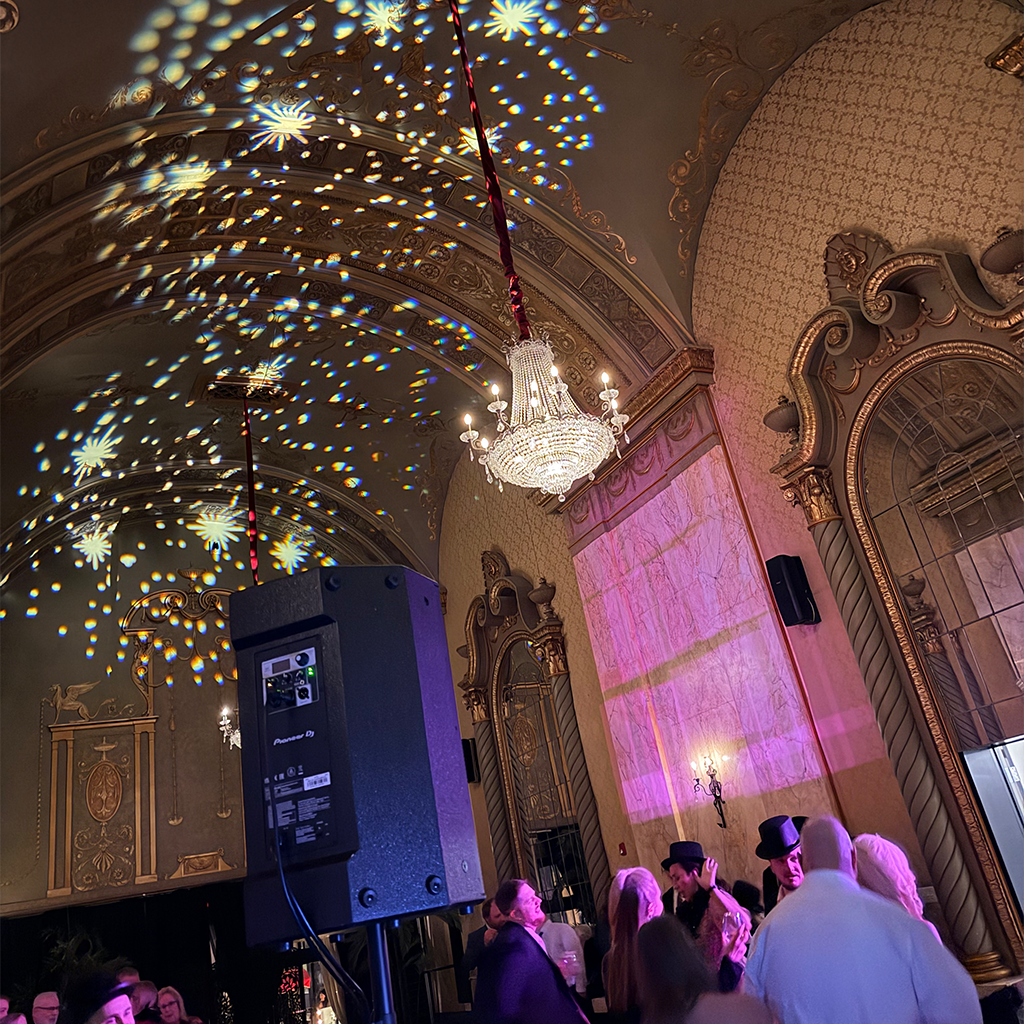
Standard steel gobos are cut from metal and project a single-color pattern, usually white or a soft neutral tone. These are often used for classic effects like star fields, soft textures, or architectural patterns. Because the design is simple and clean, steel gobos blend easily into the environment and work well when the goal is atmosphere without drawing attention to the source of the light.
Glass gobos allow for more detailed and full-color designs. Instead of a single tone, glass gobos can include multiple colors, gradients, and layered textures. This makes them a good choice when you want the projection to be a little more noticeable or when the room is large enough that subtle patterns might get lost. They still function as environmental lighting, but with more visual richness.
As with all projection effects, textured gobos work best in darker environments where ambient lighting can be controlled. Lighter, neutral surfaces reflect patterns more clearly, while darker or textured ceilings soften the effect. We plan placement based on ceiling height, surface color, and how the rest of the lighting in the room is being used.
Textured gobos are especially popular for filling ceilings in large ballrooms, adding atmosphere over dance floors, or bringing warmth to open spaces without introducing another obvious feature. Whether using clean steel patterns or full-color glass designs, they’re a simple way to add depth and visual interest while keeping the focus where it belongs.
Where Projection Works Best (And Where It Doesn’t)
Projection effects aren’t universal — and that’s something we’re upfront about.
They work best in spaces with:
- Lower ambient lighting
- Neutral-colored surfaces
- Controlled uplighting
- Defined focal areas
They struggle in:
- Brightly lit rooms
- Venues with heavy daylight exposure
- Spaces with dark or textured walls
- Rooms already filled with strong lighting effects
In some cases, physical décor, LED video displays, or lighting enhancements are a better choice. Our job is to help clients make that call honestly, not push projection just because it’s available.
When projection makes sense, it adds value. When it doesn’t, skipping it often leads to a better overall result.
Planning & Setup
Projection requires planning — but it shouldn’t create stress.
We handle placement, testing, focus, and coordination with the venue and other vendors. Projectors are set up early, aligned carefully, and tested under event lighting conditions before guests arrive.
Clients don’t operate equipment or troubleshoot issues. Everything runs as part of the larger event plan, with lighting and DJ services coordinated to avoid conflicts.
This preparation is what keeps projection effects smooth and reliable during the event.
Beloved Entertainment
Explore Projection Options In Western New York
Projection effects work best when they’re chosen for the right reasons and placed in the right environment